
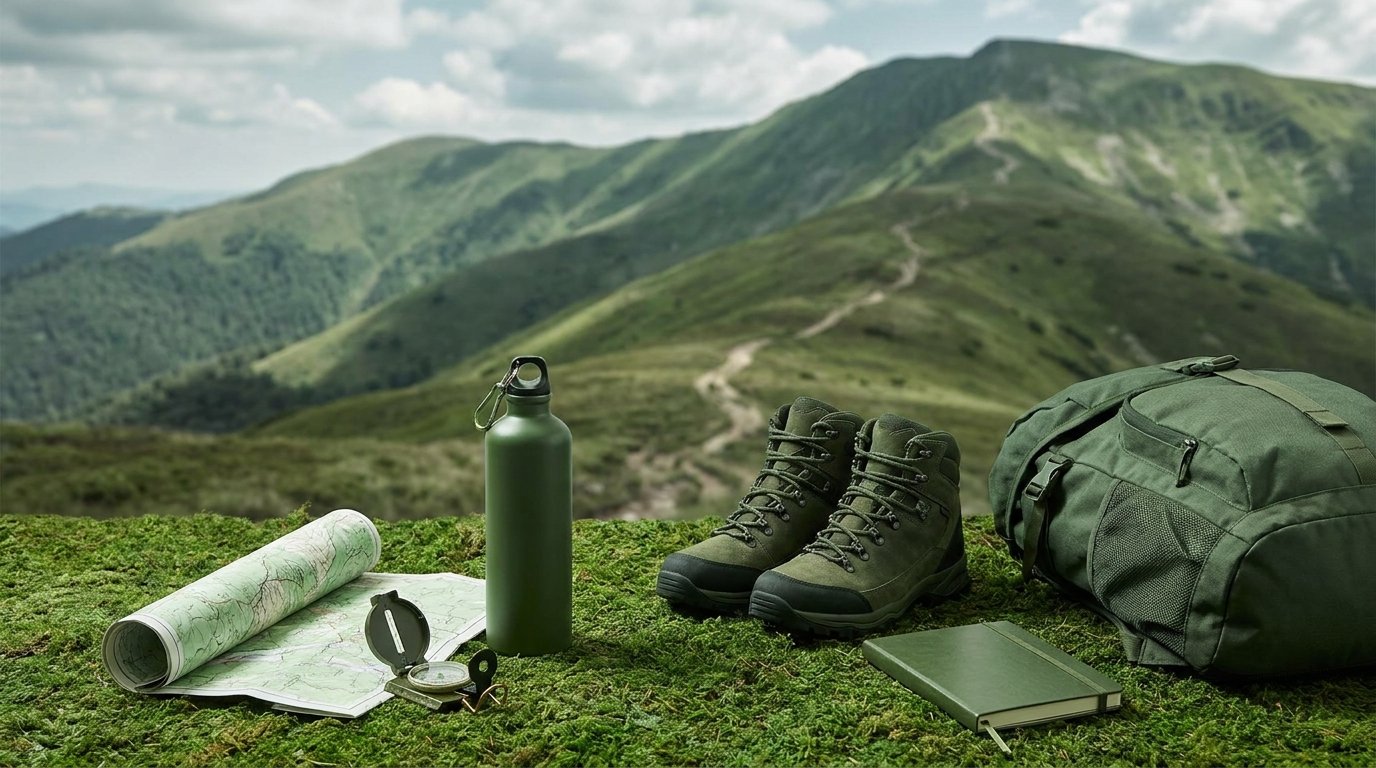
"The stuff the brochures skip. Real talk from people who walk these trails every day."
You've read the guides. You've seen the Instagram posts. You know about permits, packing lists, and the best season to visit. But there's a whole layer of reality about trekking in Nepal that most guides leave out.
These are the things you only learn once you're on the trail. The practical, sometimes surprising truths that can make or break your experience if you're not prepared for them.
Here are ten of them.
1. Dal Bhat Will Become Your Favourite Meal
This isn't a joke. Most first-timers look at the tea house menu and order pasta, pizza, or fried noodles because it feels familiar. That's a mistake.
Dal bhat is the only dish that's cooked fresh at every tea house, every single day. It's what the locals eat. It's what your guide eats. It's a complete meal: rice, lentil soup, vegetables, pickles, and often a side of meat. And at most tea houses, you get unlimited refills.
The Western dishes on the menu are made from the same limited ingredients at altitude, but with less practice and less flavour. Order dal bhat for lunch and dinner. Your stomach, your energy, and your wallet will thank you.
2. Your Phone Will Work on Most of the Trail
One of the biggest misconceptions is that you'll be completely off-grid. On popular routes like Annapurna Base Camp, Poon Hill, and the Annapurna Circuit, you'll have mobile network coverage (Ncell or NTC) for a surprising amount of the trail.
Coverage drops at higher altitudes and in deep valleys, but in most villages and tea houses below 4,000 meters, you'll be able to send messages and even make calls. Many tea houses also offer Wi-Fi for a small fee (NPR 200 to 500 per day), though speeds range from slow to painfully slow.
Don't rely on it for anything critical, but don't expect to be completely disconnected either.
3. Tea Houses Are Not Hotels
If you're imagining cozy mountain lodges with thick duvets and hot showers, adjust your expectations. Tea houses are basic mountain shelters run by local families. Here's what that actually means.
Rooms are small. Walls are thin (sometimes plywood). You'll hear your neighbour snore. Beds are simple wooden frames with thin mattresses and a pillow. Blankets are provided but not always clean. This is why bringing your own sleeping bag is essential, not optional.
Hot showers exist at lower altitudes but often run on solar or gas heating. At higher tea houses, a hot shower might cost extra or not be available at all. Toilets are a mix of Western-style and squat toilets depending on altitude.
None of this is a complaint. Tea houses are remarkable for what they are: warm shelter, hot food, and genuine hospitality in some of the most remote places on Earth. Just know what you're walking into.
4. The Stone Steps Will Destroy Your Knees
Nobody warns you about the steps. Not the altitude, not the cold, not the distance. The steps.
Thousands and thousands of uneven stone steps carved into the mountainside, especially on the Annapurna Base Camp route. The climb from Chhomrong to the sanctuary and the descent to Jhinu Danda are particularly brutal on the knees.
Two things will save you: trekking poles and a slow pace. Trekking poles reduce the impact on your knees by up to 25% on descents. Use them from day one, not just when your knees start hurting. And descend slowly. Taking stairs fast is the fastest way to end your trek early.
5. Altitude Sickness Doesn't Care About Your Fitness
This is the most dangerous misconception in Himalayan trekking. Fit, young, athletic people get altitude sickness just as often as anyone else. Sometimes more, because they push too hard and ascend too fast.
Altitude sickness is about acclimatization rate, not fitness. Your body needs time to adjust to lower oxygen levels. The symptoms (headache, nausea, dizziness, fatigue) can hit anyone above 2,500 meters regardless of how many marathons they've run.
The fix is boring but effective: ascend slowly, drink water constantly, don't skip acclimatization days, and never sleep more than 300 to 500 meters higher than the previous night once you're above 3,000 meters. If symptoms get worse, descend. There's no toughing it out at altitude.
6. Tipping Is Expected (and Deserved)
Most international trekkers don't know that tipping your guide and porter is customary in Nepal. It's not mandatory, but it's a significant part of their income and widely expected.
A general guideline: tip your guide $15 to $20 USD per day and your porter $10 to $15 USD per day. For group treks, the tips are sometimes pooled. Your trekking company or guide can advise on the local norm.
Hand the tip directly to the person at the end of the trek, ideally in an envelope. A few words of thanks go a long way. These people carry your bags, keep you safe, and make your experience possible.
7. You'll Spend More Money on the Trail Than You Expect
Even if your package covers accommodation and meals, there are extras that add up fast.
Hot showers (NPR 200 to 500), charging your phone or power bank (NPR 200 to 300 per hour at higher altitudes), Wi-Fi (NPR 200 to 500 per day), bottled water or purification tablets, snacks and chocolate bars, soft drinks, and the occasional beer at a tea house.
At higher altitudes, prices increase significantly because everything has to be carried up by porters or mules. A cup of tea that costs NPR 50 in Pokhara might cost NPR 250 at Annapurna Base Camp.
Carry enough Nepali rupees in small denominations. ATMs don't exist on the trail, and most tea houses don't accept cards. Withdraw cash in Pokhara or Kathmandu before you start.
8. The Trail Is Not Always a Trail
If you're picturing a well-marked, neatly paved hiking path, think again. Nepal's trekking trails are working paths used by locals, mules, and donkeys daily.
Sections can be muddy, rocky, narrow, washed out, or covered in animal droppings. In monsoon and early autumn, landslide debris can reroute sections of the trail. River crossings on suspension bridges are common, some of them shared with mule trains.
This is part of the charm, but it also means good footwear matters more than anything else in your pack. Waterproof, ankle-supporting, broken-in trekking boots are non-negotiable.
9. The Leeches Are Real (But Seasonal)
If you're trekking during or just after the monsoon (June through early October), you will encounter leeches on lower-altitude trails. They live in damp vegetation and attach to your shoes, socks, and skin as you walk through wet grass and forest.
They're harmless but unsettling if you're not expecting them. Leech socks (tight-woven fabric tubes worn over your boots) are the best prevention. Salt, tobacco, and insect repellent applied to your boots also help.
By mid-October, leeches mostly disappear as the trails dry out. During peak autumn season (late October to November) and spring (March to May), they're generally not an issue above 2,000 meters.
10. You'll Come Back Different
This one's harder to explain with facts and numbers. But every trekker who's been to Nepal says some version of it.
It's not just the mountains, though they're staggering. It's the pace. For days or weeks, your only job is to walk, eat, sleep, and repeat. No emails, no deadlines, no noise. Just the sound of your boots on stone, the wind through prayer flags, and conversations with people who live in a fundamentally different way.
You'll watch a tea house owner cook dinner for twenty strangers on a wood fire. You'll see a porter carry twice your body weight up stairs you struggled to climb with a daypack. You'll sit in silence watching the sun hit a peak at 6 AM and feel something you can't quite name.
People say trekking in Nepal changes your perspective. That's not marketing. That's what actually happens when you spend enough time walking through a place that doesn't care about your to-do list.
Planning your first Nepal trek? Our local team walks these trails year-round and can help you prepare for the real experience, not just the brochure version. Reach out at contact@discoverannapurna.com.
Want to read this offline or share with a friend?
Super Admin
Travel Specialist & Author
Adventure enthusiast and explorer sharing insights from the heart of the Himalayas. Focus on making mountain travel accessible and safe for everyone on the Gomayu platform.

Discussion (0)
Write CommentNo comments yet. Be the first to join the discussion!
Leave a response